The act of memorializing a loved one is a profound responsibility that bridges the gap between memory and permanence. When families choose a final resting place, the headstone serves as the primary physical anchor for their legacy. However, a beautiful monument is only as enduring as the ground upon which it rests. At Monument Services, we understand that modern headstone installation is not merely a manual labor task—it is a sophisticated engineering discipline. Over the last decade, the industry has shifted away from rudimentary methods toward highly technical, precision-based installation practices designed to combat the inevitable forces of nature, such as soil shifting, moisture intrusion, and freeze-thaw cycles. By embracing modern, scientific approaches, we ensure that the monuments we install remain upright, pristine, and structurally sound for generations to come.
The Evolution of Installation Practices
Historically, headstone installation often involved little more than digging a shallow trench and pouring a basic concrete mix. While this served its purpose for a time, it often failed to account for soil dynamics or long-term structural integrity. As professional standards have risen, the industry has recognized that the foundation is the most critical element of the entire project. Modern techniques prioritize the interaction between the monument base and the geological composition of the cemetery grounds.
The current standard requires a comprehensive site analysis before any excavation begins. This includes evaluating soil density, drainage patterns, and the slope of the land. At Monument Services, we utilize specialized equipment to test load-bearing capacities, ensuring that the foundation we design is perfectly suited to the specific environment. By integrating modern, high-strength materials and advanced geogrid reinforcement, we eliminate the common pitfalls of the past, such as the “leaning monument” syndrome, which is frequently caused by improper settling or foundation failure in unstable soil conditions.
Advanced Foundation Engineering
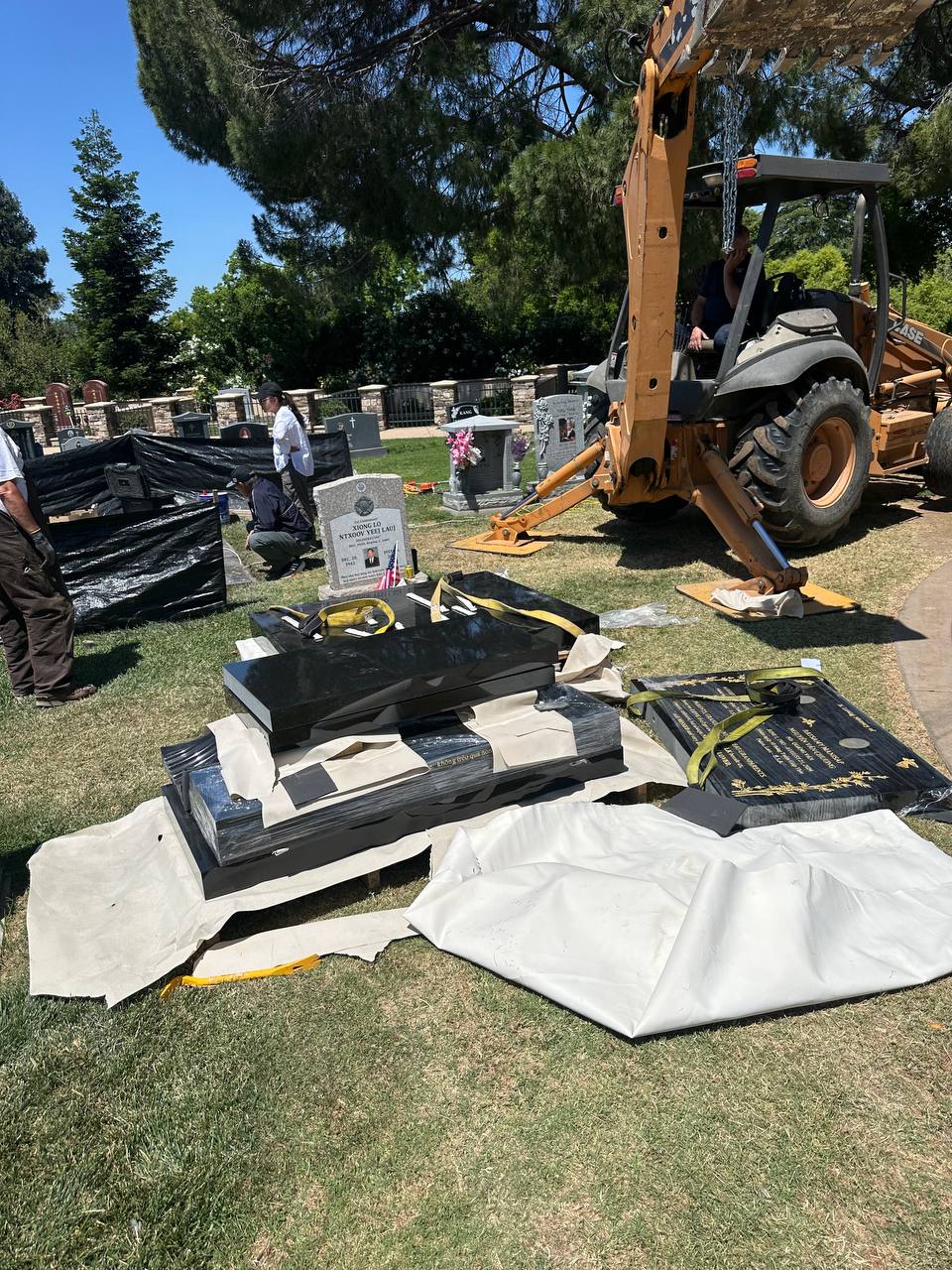
To achieve maximum longevity, the installation process must be treated as a form of specialized construction. We look at two primary pillars of modern installation: structural stability and material resilience.
The Geogrid Reinforcement Method
One of the most effective innovations in our field is the application of geogrid stabilization. In areas where the soil is soft, sandy, or prone to excessive moisture, a standard concrete pad may eventually sink or tilt. By installing a high-tensile geogrid mesh beneath the concrete foundation, we create a mechanically stabilized earth system. This grid acts as a lattice that distributes the weight of the heavy granite monument across a wider surface area, preventing localized sinking. This technique, while more labor-intensive, represents the gold standard for Monument Services, as it drastically reduces the probability of foundation cracks or catastrophic tilts over long periods.
Moisture Mitigation and Drainage
Water is the silent enemy of stone. When moisture accumulates beneath a headstone base, it accelerates erosion and, in colder climates, causes heaving during the freeze-thaw cycle. Modern installation now incorporates sophisticated drainage layers. We place a bed of compacted crushed stone or specialized aggregate beneath our concrete foundations to facilitate water migration away from the site. This simple, yet critical adjustment ensures that the ground remains stable and dry, preserving the granite surface of the headstone and preventing the staining or moss accumulation that often plagues older, poorly installed monuments.
Comparative Analysis of Installation Methodologies
To better understand how our modern methods outperform traditional techniques, we have compiled the following comparison. This table illustrates the differences between legacy installation styles and the modern systems employed by Monument Services.
| Feature | Traditional Concrete Method | Pre-Cast Concrete Pier | Monument Services Engineered Base |
| Foundation Depth | Minimal (typically 10-15cm) | Variable | Deep-set (up to 50cm+) |
| Load Distribution | Poor (prone to settling) | Moderate | Excellent (via geogrid) |
| Material Strength | Standard Cement | Reinforced Concrete | Fiber-Reinforced Concrete |
| Drainage Capacity | None (direct on soil) | Low | High (via aggregate layer) |
| Freeze/Thaw Resistance | Low | Moderate | High |
| Longevity Expectancy | 10–20 years | 25–40 years | 75+ years |
Best Practices for Structural Integrity
Achieving a flawless installation is a result of meticulous adherence to a standardized, multi-step process. At Monument Services, our technicians follow a rigid set of protocols designed to ensure that no variable is left to chance. Below are the essential steps we undertake during every installation phase to guarantee the safety and stability of the memorial.
Preparation and Excavation Phases:
- Site Survey: Assessing soil composition and moisture levels to determine the necessary foundation footprint.
- Precision Excavation: Digging to the required depth, ensuring vertical walls for the foundation to maximize structural bearing.
- Compaction: Utilizing mechanical compactors to compress the soil at the base of the hole, creating a solid substrate.
- Aggregate Bedding: Installing a layer of clean, graded stone to act as a drainage reservoir and anti-capillary break.
Post-Installation Maintenance:
- Leveling Verification: Using digital laser levels to ensure the monument is perfectly horizontal, preventing stress fractures.
- Joint Sealing: Applying silicone-based, UV-resistant sealants between the base and the die to prevent water ingress.
- Settling Monitoring: Scheduling follow-up site visits within the first six months to ensure the ground has settled evenly around the foundation.
- Surface Protection: Applying protective coatings to the granite that repel water and pollutants during the critical curing phase.
Elevating Standards at Monument Services
Choosing Monument Services means choosing a partner dedicated to technical excellence. We recognize that a headstone is not merely a product; it is a permanent statement of remembrance. Our team does not simply set a stone in place; we engineer a tribute that is designed to withstand the tests of time, weather, and environmental change. We believe that technology should be at the service of sentiment. By leveraging modern construction insights—such as structural load calculation, precise aggregate composition, and advanced bonding agents—we ensure that every monument we install stands as a testament to our commitment to quality.
Families often ask why our installation process seems more comprehensive than others. The answer lies in our philosophy: the ground will inevitably move, the seasons will change, and the earth will shift. Our installations are designed to absorb and resist these forces, rather than surrender to them. We take pride in the fact that, decades from now, the headstones installed by our team will still stand with the same dignity and stability as the day they were first unveiled. When you entrust us with this responsibility, you are not just getting a service; you are securing peace of mind, knowing that the physical embodiment of your love is grounded in the best science available today. We are Monument Services, and we are committed to building memories that endure.